
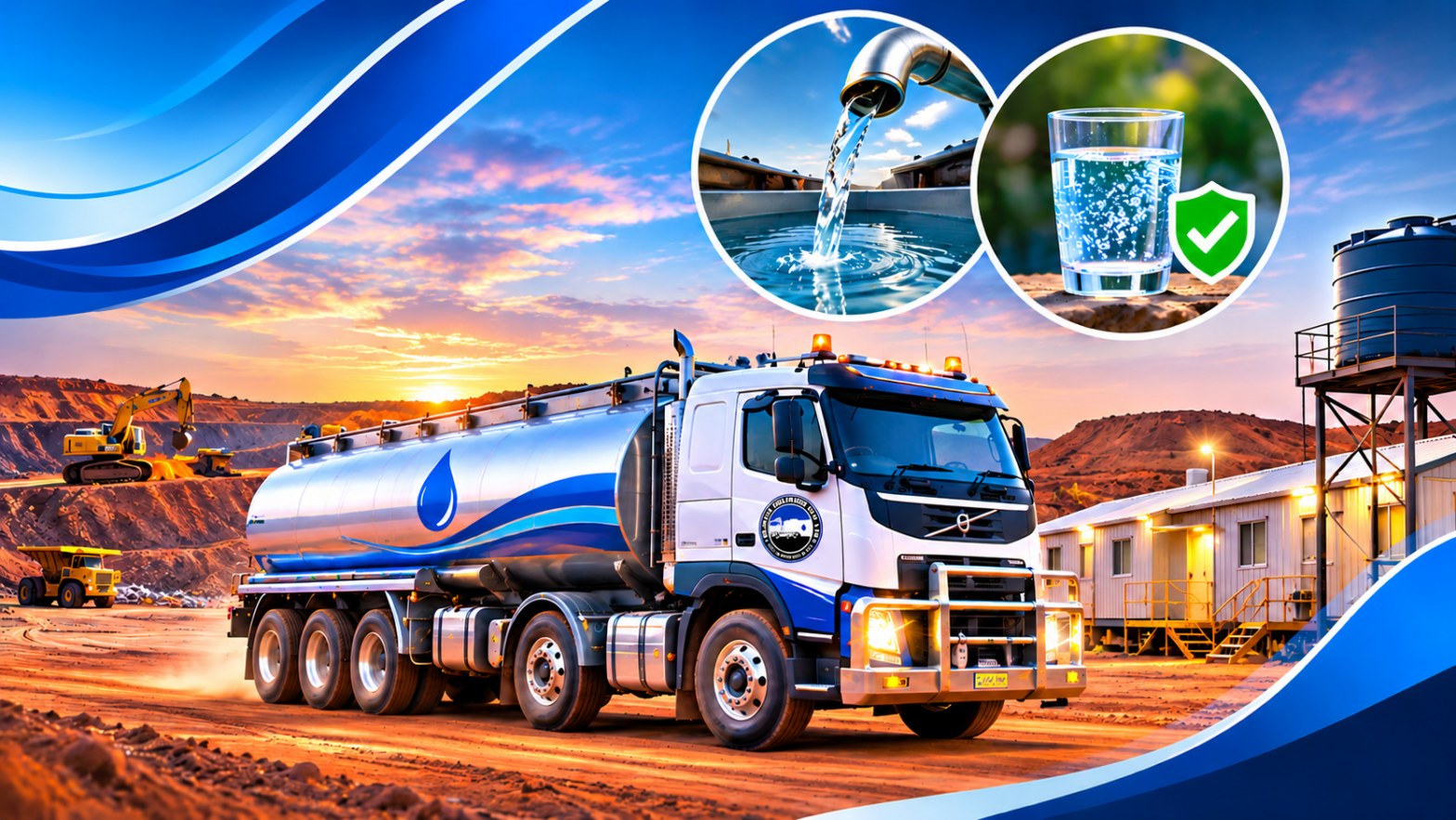
Out in the goldfields, the water truck isn’t a delivery. It’s your camp’s only tap.
When every drop your crew drinks, cooks with, and showers in arrives by road, the tanker carrying it matters as much as the water itself. So water from a potable water tanker truck in Kalgoorlie is only safe to drink when three things line up. The tank is food-grade and used for nothing but drinking water. It’s cleaned and sanitised between loads, and the operator is registered as a food business. Miss one, and your clean water could become contaminated just because it didn’t stay clean through transport. In temperatures of 40 degrees in dusty conditions over long hauls, a shortcut is suddenly not such a good idea anymore.
This guide will discuss what makes tanker water safe, the difference between potable and non-potable water, and the questions you should be asking when making a booking.
A potable water tanker truck is a vehicle fitted with a sealed, food-grade tank that carries drinking water from an approved supply to places without mains water. Only its tank, hoses, and fittings are intended to hold drinking water; thus, it is impossible for anything to contaminate that water.
Goldfields uses these trucks to deliver water to mining centres, exploration sites, and other areas where there is no access to clean water. The features of an adequate potable tanker include:
The difference matters. A non-portable tanker carrying water for dust suppression or drilling can look identical from the roadside, but its water isn’t fit to drink.
Tanker water is safe to drink when it comes from a food-grade source used for drinking water, is cleaned between loads, and is run by an operator registered for food businesses. The water in the tankers cannot be tested visually. Contaminated water will normally smell and taste fine. The water should be tested before the trucks arrive. Insist that the operators demonstrate for you, and don’t take their word for it. Here is a table for you showing the things that you must be doing:
| What to check | What safe looks like | Red flag to avoid |
| Tank material | Food grade stainless steels | Rusty tank |
| Tank use | Drinking water on every load | Used for dust suppression |
| Cleaning | Sanitised on a set schedule | We rinse it when it needs it |
| Registration | Registered food | No registration detail on request |
| Water source | Approved mains or scheme supply | Untested bore |
| Hoses and fittings | Dedicated, capped when not in use | Shared hoses left lying on the ground |
| Vehicle | Main roads and well-maintained spots | No details needed |
So, based on this table, if you find any answer vague, then make sure that you do not use it. It is not only the beginning of your work that counts. All your efforts are rendered useless when you deliver your clean products into dirty camp tanks, so make sure that on-site tanks are well inspected and cleaned.
A potable water tanker carries drinking water in a dedicated food-grade tank, while a non-potable tanker carries water for jobs like dust suppression, drilling, and construction where the water is not safe to drink.
They all may seem the same from the roadside: a prime mover, a tank, and some hoses. It is the contents of the tank, the construction and maintenance of the tank, that makes the difference. Here are a few bullets for you to understand the difference:
It is vital that the two vehicles do not share the same tank. After using a tanker for transporting contaminated water, it cannot just be washed off and reused because some contaminants will remain attached to the tank, valves, and hoses.
Goldfields camps choose Hunter Holdings because it’s a local potable water tanker truck company with more than 35 years of experience, a modern Scania fleet, and a food-grade potable tanker registered within the city builder.
When your camp’s drinking water depends on trucks turning up, you want an operator who knows the road and the conditions. Well, we can say that Hunter Holding is privately owned and based in West Kalgoorlie, so the people running your deliveries live and work in the region they service. Below is a short table for you:
| What your camp needs | What Hunter Holding provides |
| Safe drinking water | Stainless steel and food-grade potable tankers |
| Proof of compliance | Registered food business with the City of Kalgoorlie |
| Reliable trucks | Four Scania prime movers, fully accredited with Main Roads |
| Water for site work | Separate non-potable tankers |
| Storage | On-site storage |
Hunter Holdings deals with mining, government, rural, and civil construction customers, ranging from work done in towns to sites that have no access to fresh water. A single operator is able to provide water for drinking, the water tank and non-drinking water.
Safe drinking water for remote camps does not happen just by luck. It does not come down to the tanker that carries it: a food-grade tank used only for potable water, cleaned on schedule and run by registered operators. Ask the right questions, and you might end up with a company like us that would give you the best water available.
Bulk water specialists, supplying the Goldfields of Western Australia for over 35 years.
All Rights Reserved Copyrights 2021 | Powered by onqanet technologies pvt ltd