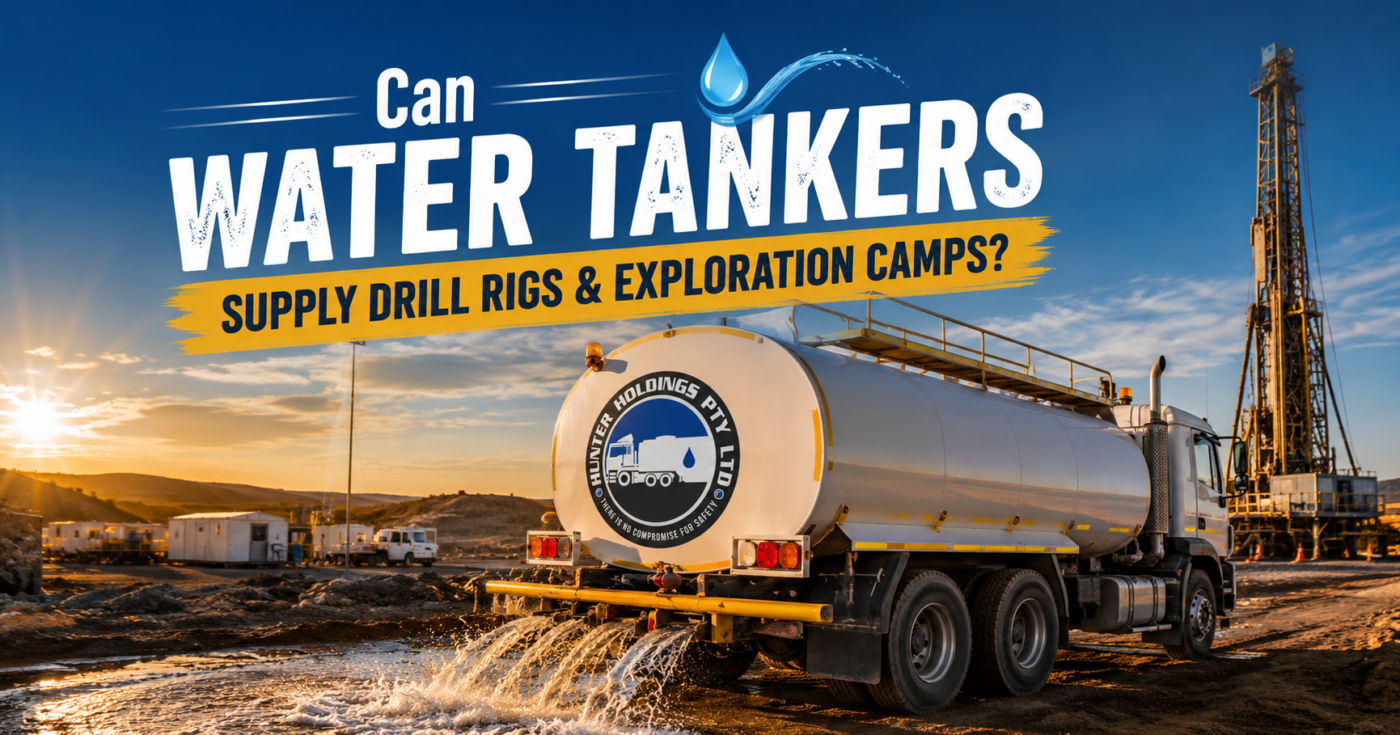
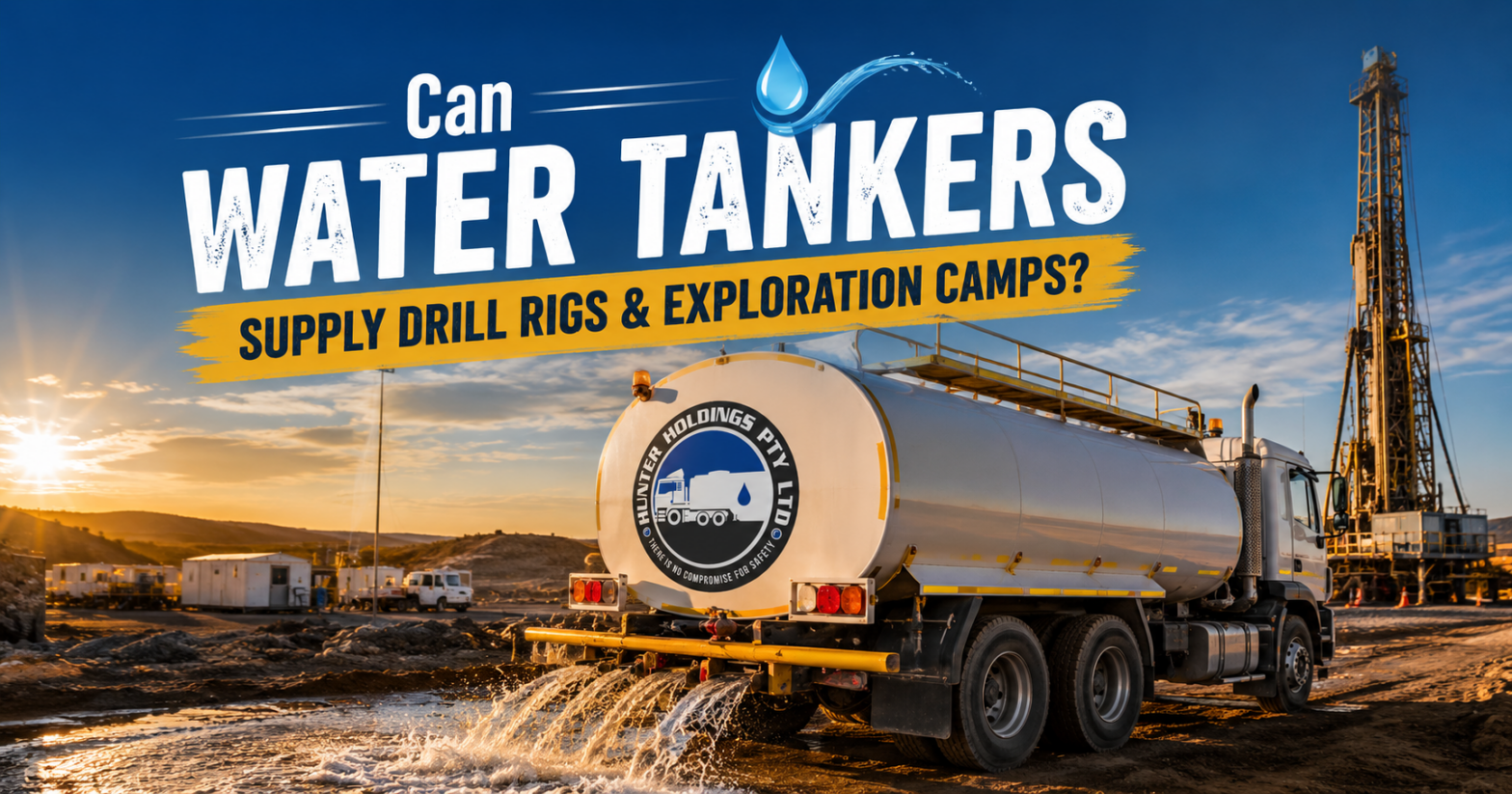
If you’ve spent any time working in exploration or mining operations out of Kalgoorlie, you already know that water is never something you take for granted. Sites can be hours from the nearest town, temperatures push into the high thirties for months at a stretch, and the moment water supply becomes unreliable, everything else on site starts to unravel — drilling operations, camp hygiene, dust suppression, the lot.
The question of whether water tankers Kalgoorlie can actually service drill rigs and remote exploration camps isn’t just a logistical one. For a lot of project managers and site supervisors, it’s a make-or-break operational decision that affects how smoothly a project runs from day one.
The short answer is yes — but how well it works depends almost entirely on who you’re working with and how the supply is planned.
The Goldfields region around Kalgoorlie is not a forgiving country. It’s dry, it’s remote, and the distances involved between a water source and an active exploration site can be significant. A drill rig running through a ten-hour shift needs a reliable water supply for the drilling process itself — and that’s before you factor in the camp that’s keeping the crew fed, washed, and functional alongside it.
When water supply fails or becomes inconsistent, the downstream effects hit fast. Drilling slows or stops. Dust suppression on access tracks becomes impossible. Camp operations get stretched. And in the heat of a Goldfields summer, crew welfare becomes a genuine concern very quickly.
This is exactly why getting water logistics sorted before a project kicks off — not after problems start appearing — is something experienced site managers treat as a priority rather than an afterthought.
Supplying water to a suburban construction site and supplying it to a drill rig sitting sixty kilometres down an unsealed track are two completely different jobs. The tankers need to be built for off-road conditions, the drivers need to know the terrain, and the scheduling needs to account for road conditions that can change significantly after rain.
Water tankers in Kalgoorlie that genuinely service the mining and exploration sector are set up for this kind of work — the right vehicles, the right experience, and an understanding of what remote sites actually need rather than what works fine on a sealed road.
The drilling process itself requires a consistent supply of water for circulation through the drill string. The volume needed depends on the type of drilling, the depth, and the formation being drilled through — but the one thing that doesn’t change is that it needs to be there when it’s needed. An interruption to drilling water supply isn’t just a minor inconvenience; it can mean costly downtime on equipment that’s being hired by the hour or day.
Exploration camps — even temporary ones — need clean drinking water for the crew. Depending on the size of the camp and how long it’s operational, this can mean regular scheduled deliveries or larger storage tanks that are topped up on a set schedule. Either way, it needs to be planned properly and not left to chance.
Anyone who’s driven a haul road or access track in the Goldfields during a dry stretch knows what uncontrolled dust does to visibility, equipment wear, and crew health. Water tankers in Kalgoorlie are regularly used for dust suppression on site access roads and around drill pads — a function that’s easy to underestimate until you’re dealing with a site where it’s not being done.
Remote sites need contingency water on hand for fire suppression, particularly during the summer months when fire risk in the Goldfields is elevated. Having a tanker arrangement in place that includes emergency supply capacity is something worth building into the water logistics plan from the start.
Before you can plan supply, you need to know what you’re actually going to use. Drilling water requirements, camp population, dust suppression frequency, and any other site-specific needs should all go into that calculation. Underestimating daily demand is one of the most common mistakes on remote projects — and it’s one of the easiest to avoid with a proper upfront assessment.
Access to remote sites in the Goldfields changes with the seasons. A track that’s straightforward in the dry can become impassable after significant rain, and supply schedules need to account for that. Working with a water tanker provider that knows the region and has dealt with those access challenges before makes a real difference when conditions change unexpectedly.
Relying on just-in-time delivery for something as critical as water supply on a remote site is a risk that most experienced project managers won’t take. Having adequate on-site storage — water tanks or temporary bladders — means that a delayed delivery doesn’t immediately become an operational crisis.
This can vary, depending on the operator and tanker configuration. Goldfields operators have no problem servicing sites hundreds of kilometres away from Kalgoorlie, even if they are on dirt roads. Access and road quality, not distance itself, is the determining factor.
It depends on the amount of drilling being done and how much water storage there is at the site. Sometimes drill sites need to be serviced every day when drilling is taking place, while other sites may be able to go without services because of larger amounts of on-site water storage. Frequency of water deliveries needs to be sorted out in the planning stage.
Usually, potable and non-potable water are separated in order to prevent contamination. This means that water tankers either carry only one type of water, or have compartments for both types separately. Check with your operator whether they provide both potable and non-potable water.
There’s a difference between a water tanker company that can technically reach your site and one that’s genuinely set up to service remote mining and exploration operations reliably. The vehicles matter, the scheduling capability matters, and the experience of understanding what remote sites actually need — rather than just delivering water and leaving — matters quite a bit.
Hunter Holdings has been supplying water tanker services in Kalgoorlie and across the Goldfields region to exploration camps and drill rigs that other operators find too remote or too complicated. If you’re planning a project and water supply logistics are part of what you’re working through, they’re worth talking to before the project starts rather than after the first supply problem appears on site.
Bulk water specialists, supplying the Goldfields of Western Australia for over 35 years.
All Rights Reserved Copyrights 2021 | Powered by onqanet technologies pvt ltd